Global Market Reset: Gold and Silver Prices Dip as AI Inflows Shift Toward Agentic Software
(PUNJAB): Global commodity hubs and digital equity markets are experiencing a simultaneous structural reset following a highly volatile trading session.
On Monday, June 29, 2026, spot gold and silver prices plunged sharply across domestic and international trading desks. The sudden correction triggered a historic sell-off, with retail Indian consumers liquidating an estimated 50 tonnes of physical gold bullion. This drop matches a broader macroeconomic correction across the artificial intelligence technology layer.
Market data reveals that chip leader NVIDIA (NVDA) has plummeted 14.18% over the past month, testing a major technical floor at $192.53. This shift marks an intense sector rotation out of high-flying semiconductor hardware and into physical commodities, high-bandwidth memory suppliers, and newly emerged agentic AI enterprise infrastructure.
Below is an analytical breakdown of this dual-market shift. It tracks why safe havens are facing pressure alongside tech equities, and how investors can position themselves for the next trading cycle.
Part 1: Inside the June 2026 Gold & Silver Market Flash Crash
The opening session for the trading week of June 29 delivered an unexpected shock to precious metals investors. Multi Commodity Exchange (MCX) metrics showed intense intraday volatility that disrupted a months-long bull run.
Breaking Down the Intraday Commodity Data
On the domestic front, MCX August gold futures slid to ₹1,43,532 per 10 grams, tumbling directly from a previous close of ₹1,44,162. This initial sell-off sparked a parallel drop in industrial metals.
MCX silver futures shed more than ₹400 right at the opening bell, trading at ₹2,23,055 per kilogram. On global exchanges like COMEX, spot gold slipped 0.36% to $4,081 per ounce, while international silver fell more than 1.15% to trade near $58 per ounce.
====================================================================
DOMESTIC & GLOBAL PRECIOUS METAL PERFORMANCE (JUNE 29, 2026)
====================================================================
ASSET CLASS TRADING DESK CURRENT RATE SESSION MOVE
--------------------------------------------------------------------------------------------------------
Gold (24K / 10g) MCX Futures ₹1,43,532 - ₹630
Silver (999 / 1kg) MCX Futures ₹2,23,055 - ₹417
Spot Gold (Ounce) COMEX $4,081.00 - 0.36%
Spot Silver (Ounce) COMEX $58.00 - 1.15%
-------------------------------------------------------------------------------------------------------
ESTIMATED RETAIL VOLUMETRIC SURGE: 50 Tonnes Liquidated Domestically
====================================================================
The Geopolitical Trigger: The Strait of Hormuz De-escalation
The primary catalyst for this sudden drop was the surprise resolution of a dangerous geopolitical standoff in the Middle East. Over the weekend, military exchanges between the United States and Iran threatened to close critical maritime channels.
However, by late Sunday, official diplomatic updates from Washington confirmed a formal pause in hostilities. This development allowed commercial shipping vessels to safely resume transit through the Strait of Hormuz.
Because the immediate risk premium vanished from global shipping routes, institutional traders instantly cut their defensive equity hedges. This triggered widespread profit-taking in both gold and silver assets.
Part 2: The Core Shift in Artificial Intelligence Infrastructure
While precious metals correct due to easing geopolitical tension, the technology sector is experiencing its own structural shift. The massive capital boom that drove artificial intelligence spending toward $800 billion annually by mid-2026 has entered a new phase. Investors are shifting away from foundational silicon processing hardware to focus on execution-level corporate applications.
The NVIDIA Mystery: Record Fundamentals vs. Stock Multiples
NVIDIA Corporation (NVDA) has seen its valuation slide down roughly 14.18% over the past month, closing down at $192.53. This correction comes despite the company posting a record fiscal quarter with $81.6 billion in revenue, marking an 85% year-over-year expansion.
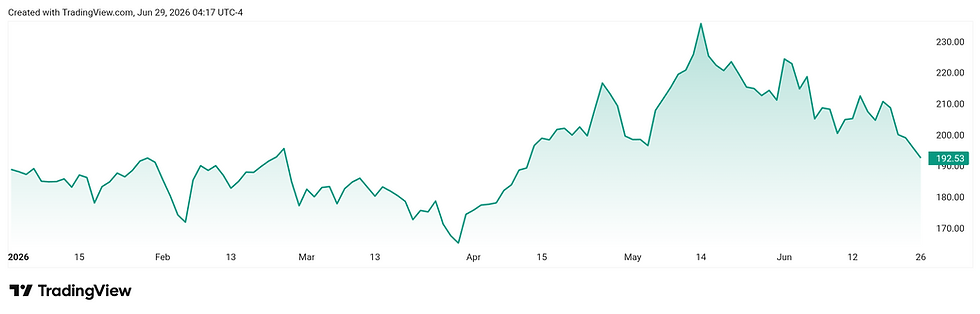
This divergence between stellar operational earnings and a declining stock price stems from real-time global compute data. Industry trackers reveal that the average hourly rental cost for NVIDIA’s flagship B200 graphics processing units (GPUs) dropped from $6.11 down to $4.22 within a three-week window.
This 31% drop in compute rental rates indicates that global data center capacity is temporary outpacing immediate commercial software integration workloads. This shift has triggered multiple compressions across high-value chip designers.
High-Bandwidth Memory (HBM) Reshuffles the Chip Hierarchy
As foundational chip designers face headwinds, institutional capital is rotating into the memory layer required to process advanced machine learning workloads.
Samsung Electronics has successfully integrated its next-generation HBM4 architectures into upcoming top-tier server clusters.
SK Hynix and Micron Technology continue to hold massive market shares, commanding 20% to 25% of global capacity.
This shifting hardware dynamic introduces an unexpected link back to the precious metals market: advanced HBM packaging lines and AI server hardware require massive amounts of physical industrial silver to maintain electrical conductivity and signal integrity.
Part 3: The Rise of Agentic AI and Enterprise Solutions
The contraction in chip valuations does not mean the artificial intelligence boom is slowing down. Instead, the market size has reached $514.5 billion in 2026, jumping 19% from the previous year. The core investment thesis has shifted from building massive data centers to deploying autonomous software systems.
From Chatbots to Autonomous Digital Workforces
The dominant theme across global tech centers this week is Agentic AI. Corporate clients are no longer paying for simple conversational chatbots that require constant human prompting.
Instead, enterprise capital is flowing toward autonomous systems capable of planning, executing, and optimizing complex business workflows with minimal oversight.
Key execution milestones reshaping corporate operations this month include:
Enterprise Business Integration: Major platforms have rolled out advanced workflow extensions covering algorithmic public equity investments, custom data analytics pipelines, and automated investment banking.
Document Refinement Layers: New document manipulation models allow autonomous software agents to target, annotate, and alter specific subsets of live corporate sheets and data arrays.
Interactive Code Conversions: Modern development portals can now instantly convert broad unstructured concepts into shareable, interactive digital products.
Part 4: Strategic Positioning Matrix for Global Investors
This dual-market shakeup offers a clear blueprint for entrepreneurs, tech developers, and retail financiers looking to adjust their portfolios.
1. Monitor the MCX Support Floors: With experts predicting that MCX gold could look to reclaim its ₹1,50 crore baseline if geopolitical frictions return, the current drop under ₹1.44 lakh presents an attractive entry point for physical asset hedges.
2. Track the Industrial Silver Demand Curve: Because advanced AI server architectures and solar infrastructure rely heavily on industrial silver components, the current price dip offers a long-term value play driven by structural tech manufacturing needs.
3. Pivoting to Application-Layer AI Software: As hardware margins face short-term pressures due to expanding compute supply, the highest growth potential is shifting toward companies building specialized, agentic software layers for vertical industries like logistics, fintech, and advanced corporate operations.
The shifting market dynamics of late June 2026 emphasize a vital financial reality: technology developments and physical asset markets are deeply interconnected. By tracking capital movements as they rotate between digital processing infrastructure and real-world safe havens, sharp market participants can build balanced portfolios capable of thriving through volatile market cycles.


Comments